Dr. Gymbro
←

#brain oxygenation

1 article
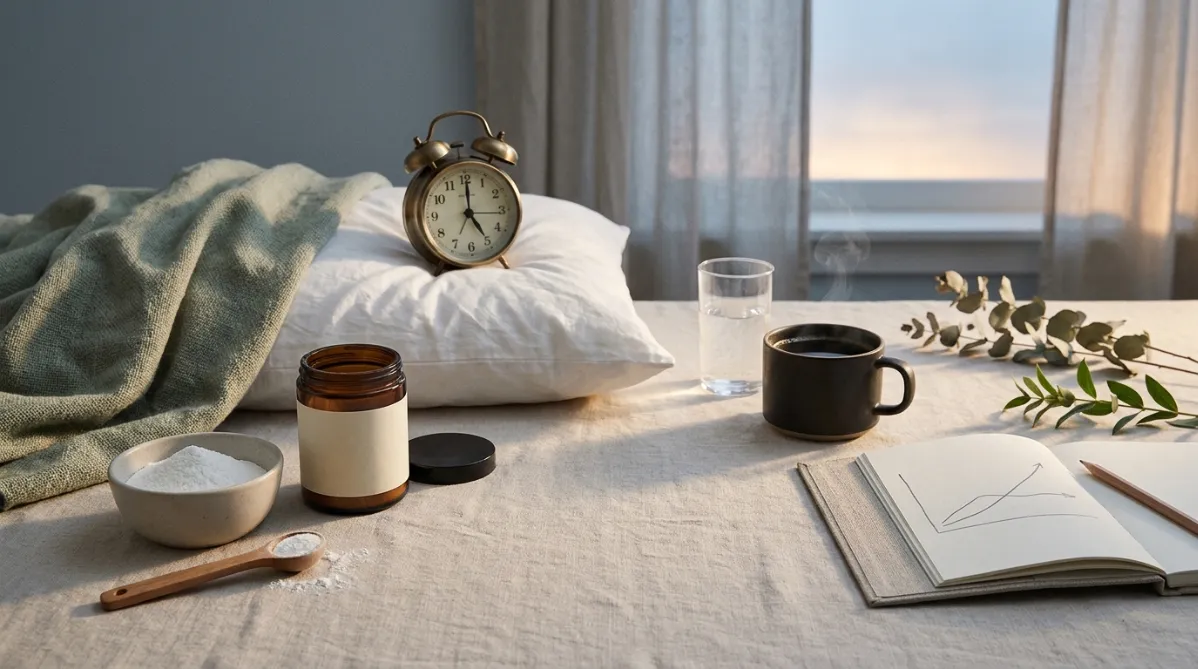
A landscape editorial still life on a pale oatmeal-colored linen surface, photographed in soft morning window light with long, gentle shadows. On the left, a small matte ceramic bowl holds fine white creatine powder, with a wooden measuring spoon resting beside it, a few grains scattered across the fabric. Next to it sits a minimalist amber glass supplement jar with a plain cream label and no readable text, its lid set beside it. In the center, a rumpled white cotton pillow and a loosely folded sage-green blanket suggest a night without sleep. On top rests a vintage brass alarm clock with its hands at a pre-dawn hour. To the right, a thin glass of water and a ceramic mug of black coffee send up a faint curl of steam, backed by a half-drawn sheer curtain that lets in pale blue-gray dawn light with a warm peach glow at the horizon.

Along the back edge, a few delicate botanical stems of dried eucalyptus and a small sprig of green leaves add organic texture. Nearby lies an open notebook with abstract hand-drawn graph lines, a simple line chart with two diverging curves, and a pencil. The notebook symbolizes the study's mixed findings, one line rising and the other flat, without any legible words or numbers.

The palette is muted and modern: warm cream, soft sage, dusty terracotta, muted amber, and cool dawn blue. The composition follows the rule of thirds, with generous negative space on the upper right for headline overlay. The shallow depth of field blurs the background into a creamy bokeh. The mood is quiet, contemplative, and slightly tired but hopeful, like a trendy wellness and science journal cover with a refined, tactile, natural feel. High-resolution photography with subtle film grain, no people, no text, and no futuristic elements.
science research

Creatină + GAA după o noapte nedormită: stimulare cerebrală sau iluzie?

BY DR. GYMBRO ·

Un mic studiu randomizat a arătat că suplimentul cu creatină‑GAA a crescut saturația de oxigen în cortexul frontal și temporal după 24 de ore de privare de somn. Însă atenția, timpul de reacție și acuratețea nu s-au îmbunătățit în mod măsurabil. Având doar 22 de participanți repartizați în patru grupuri, efectele mari trebuie interpretate cu prudență. În această analiză explicăm ce este GAA, ce a demonstrat și ce nu a demonstrat studiul, și de ce lucrătorii în schimburi, studenții și sportivii ar trebui să îl considere un indiciu de cercetare timpurie, nu o soluție dovedită.

This page is available in